Ecology: Food Webs, Trophic Levels & Energy Flow
Producers, primary consumers, secondary consumers, tertiary consumers, decomposers — and the 10% rule that connects them. Master food chains, food webs, and energy pyramids in one focused lesson.


Five categories of organism — that's it
Ecology questions on the CBE almost always boil down to identifying which category an organism falls into:
- Producers — plants and algae. Make their own food via photosynthesis.
- Primary consumers — herbivores. Eat producers.
- Secondary consumers — carnivores/omnivores. Eat primary consumers.
- Tertiary consumers — top predators. Eat secondary consumers.
- Decomposers — bacteria and fungi. Break down dead organisms and return nutrients to the soil.
Food chain: a single straight line
A food chain is one path of energy flow:
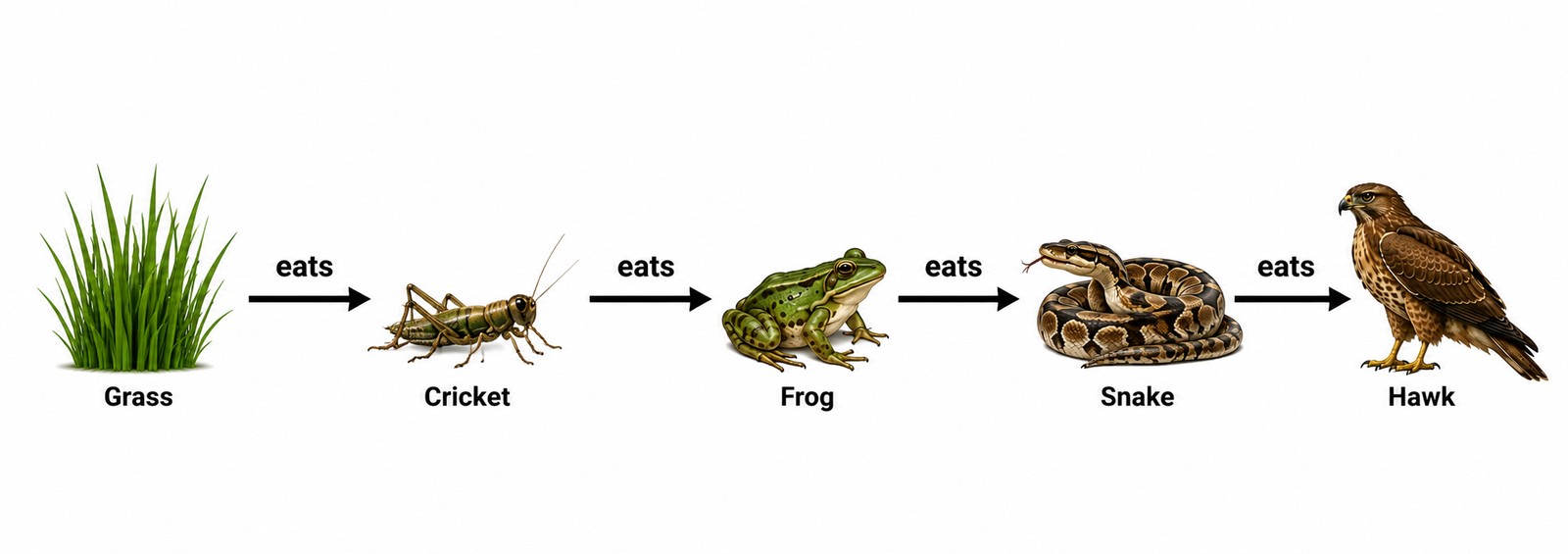
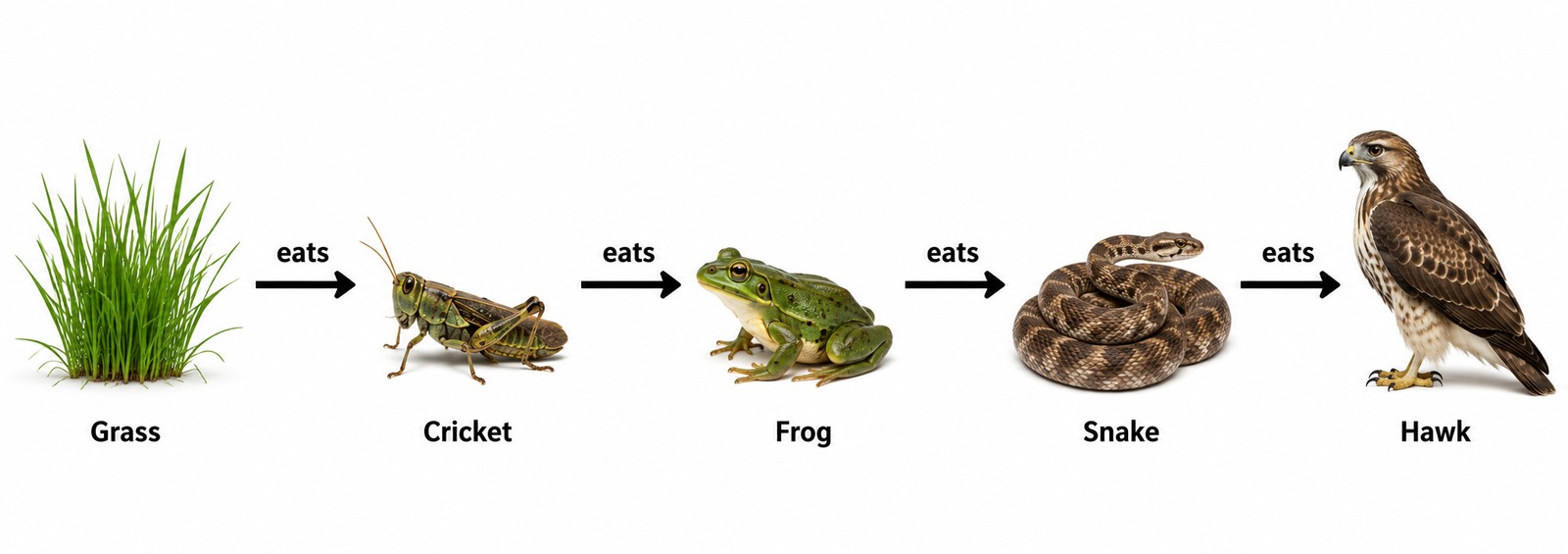
Grass → Cricket → Frog → Snake → Hawk
- Grass = producer
- Cricket = primary consumer (eats grass)
- Frog = secondary consumer (eats cricket)
- Snake = tertiary consumer (eats frog)
- Hawk = top predator (eats snake)
Food web: many interconnected chains
A food web is a network of overlapping food chains. A single organism can be eaten by multiple predators, and predators usually eat more than one prey species.
Common CBE question: “What happens if the frogs are removed?” The answer requires tracing arrows in both directions:
- Insects (frog’s prey) — populations increase because nothing eats them.
- Snakes (frog’s predator) — populations decrease because their food disappears.
Energy pyramid and the 10% rule
Only about 10% of the energy at one trophic level is transferred to the next. The other 90% is lost as heat, used for metabolism, or in indigestible parts. This is why food chains rarely go beyond 4–5 levels — not enough energy left.
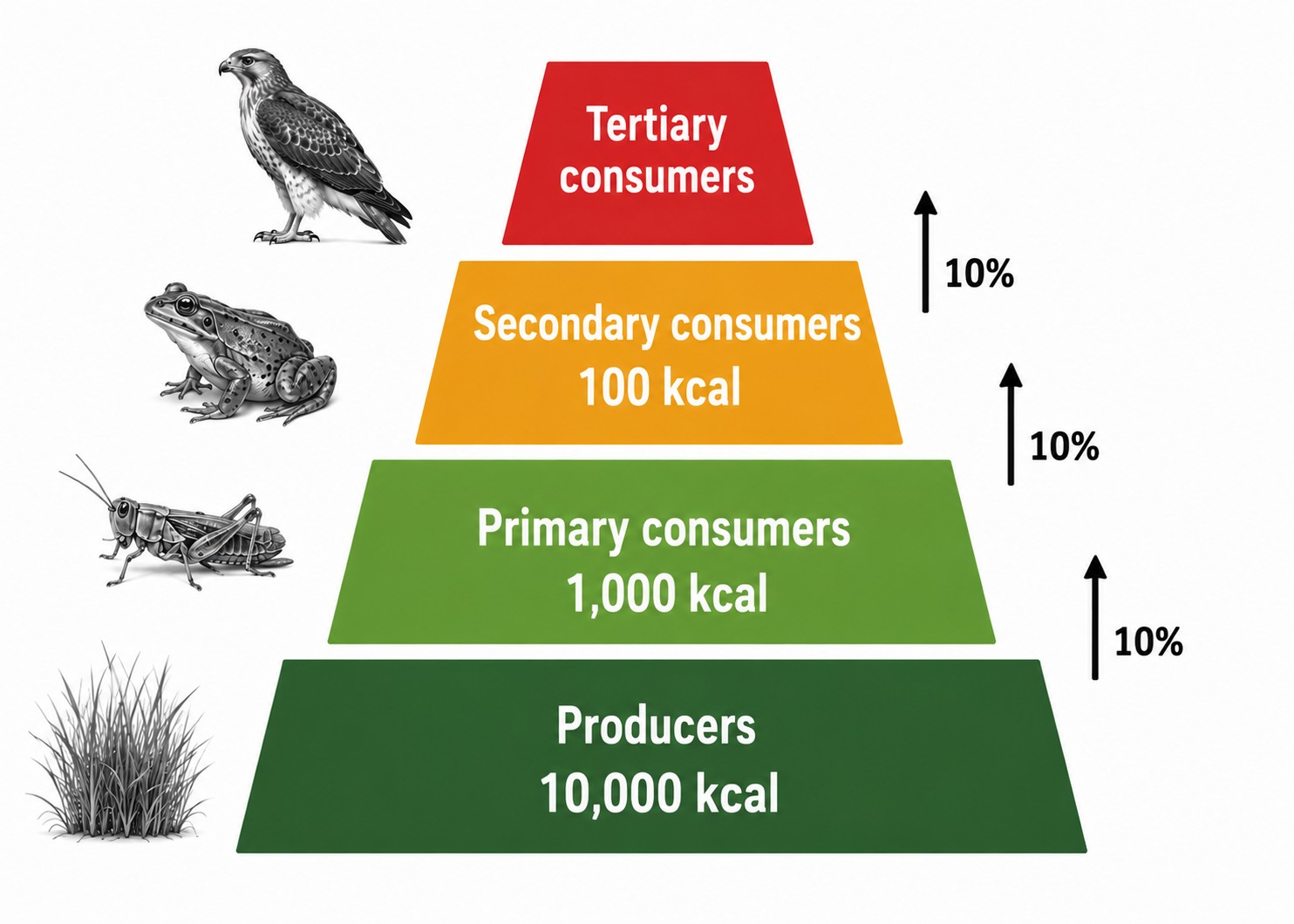
- Primary consumers: 10,000 × 10% = 1,000 kcal
- Secondary consumers: 1,000 × 10% = 100 kcal
- Tertiary consumers: 100 × 10% = 10 kcal
Symbiosis: three relationship types
- Mutualism (+/+) — both species benefit. Bee + flower (nectar for bee, pollination for flower).
- Commensalism (+/0) — one benefits, the other is unaffected. Barnacle on whale.
- Parasitism (+/−) — one benefits, the other is harmed. Tapeworm in human.
- Predation (+/−) — predator eats prey. Hawk + mouse.
Check yourself