Evolution & Natural Selection: How Populations Change Over Time
Natural selection isn't 'survival of the strongest' — it's differential reproduction based on heritable variation. Master Darwin's mechanism, the evidence for evolution, and the famous Galápagos finches.


Darwin's idea in one sentence
Natural selection is the differential reproduction of individuals due to heritable variation in traits that affect survival and reproduction.
That’s a mouthful, but unpacking it gives you everything you need:
- Variation — individuals in a population differ from each other.
- Heritability — those differences are passed from parent to offspring.
- Differential survival/reproduction — some variants reproduce more than others.
- Time — the favored traits become more common across generations.
What natural selection is NOT
- It’s not “survival of the strongest.” A peacock’s tail is heavy and impractical, but it survives because peahens prefer it.
- It’s not directed by any goal. Mutations are random; selection just filters them.
- It’s not something individuals do. Populations evolve. Individuals just live or die.
The classic example: peppered moth
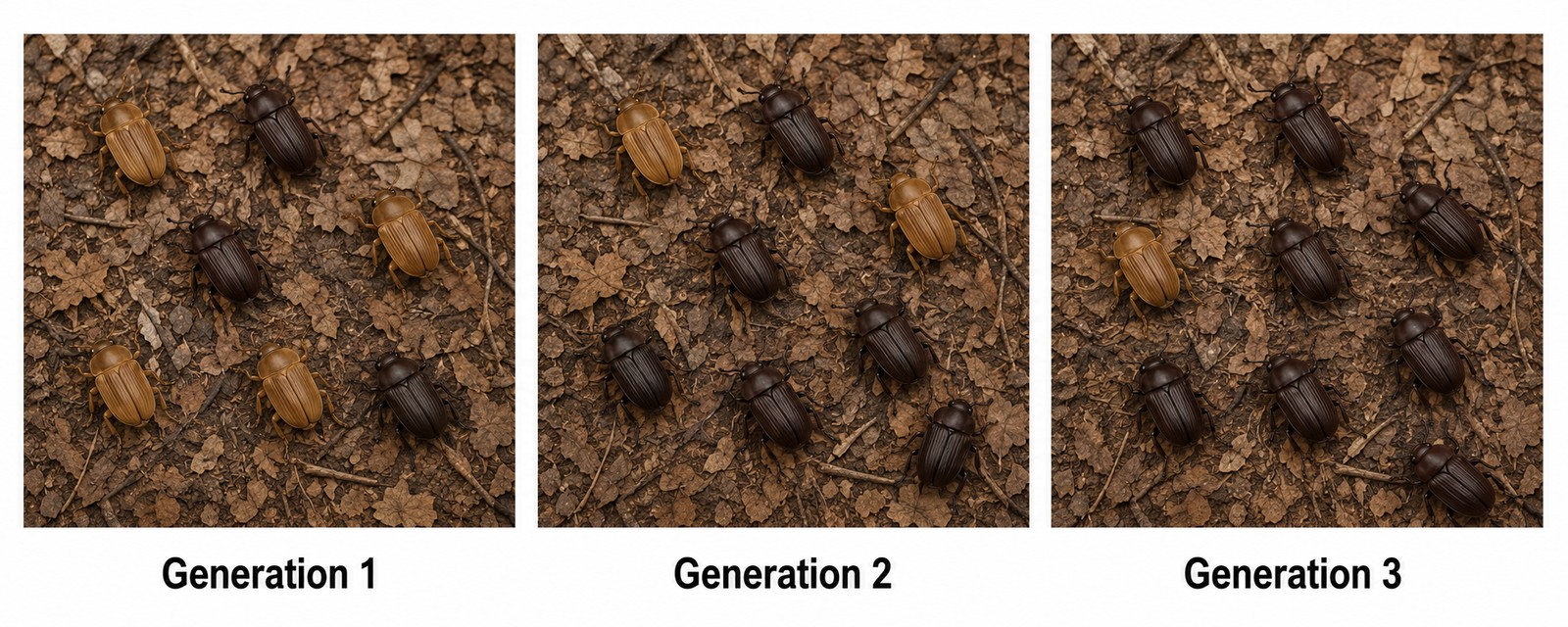
Across three generations, the dark variants come to dominate. Why? Predators (birds) spotted and ate the lighter ones more often. The dark beetles weren’t “trying” to evolve — they just had a heritable color trait that helped them survive long enough to reproduce.
Darwin's Galápagos finches
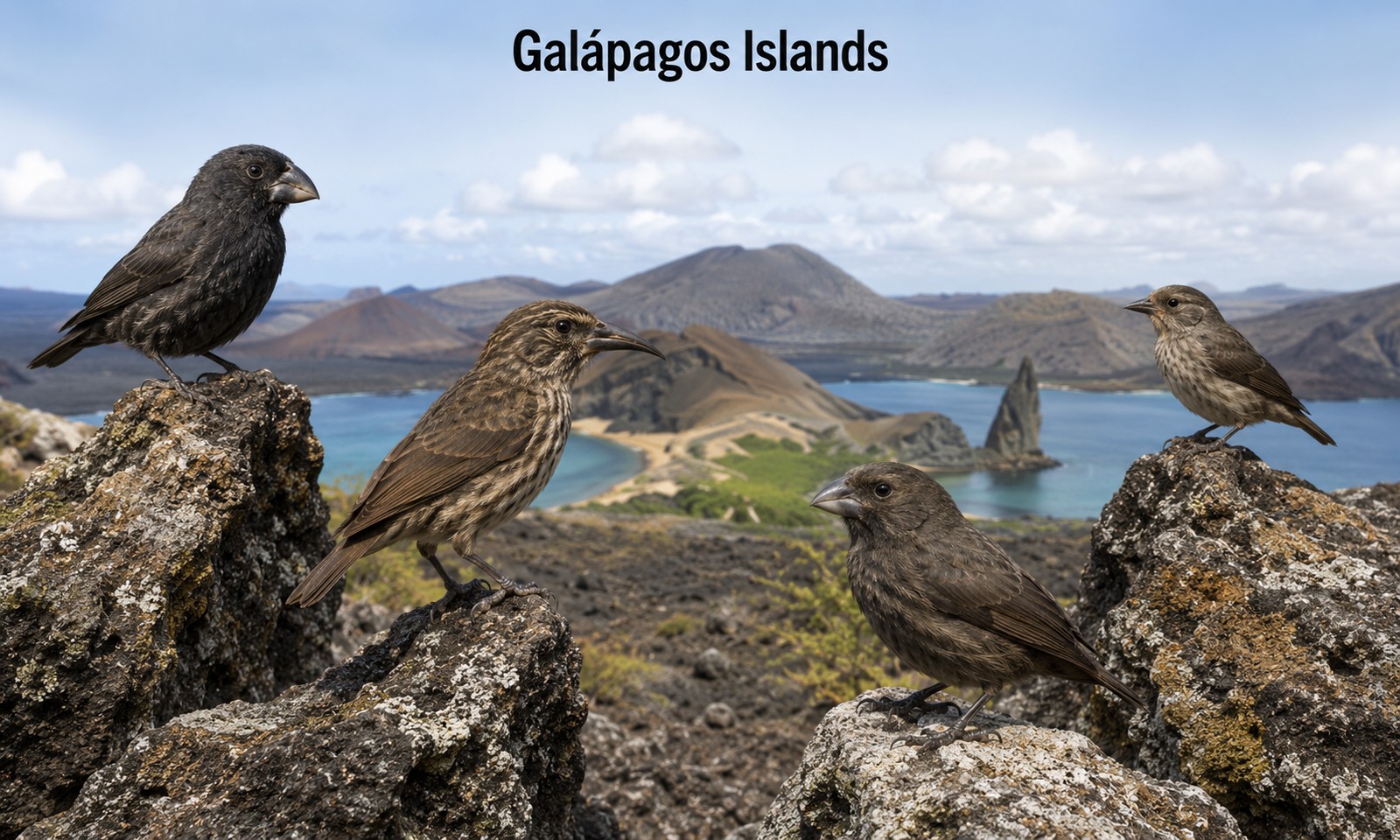
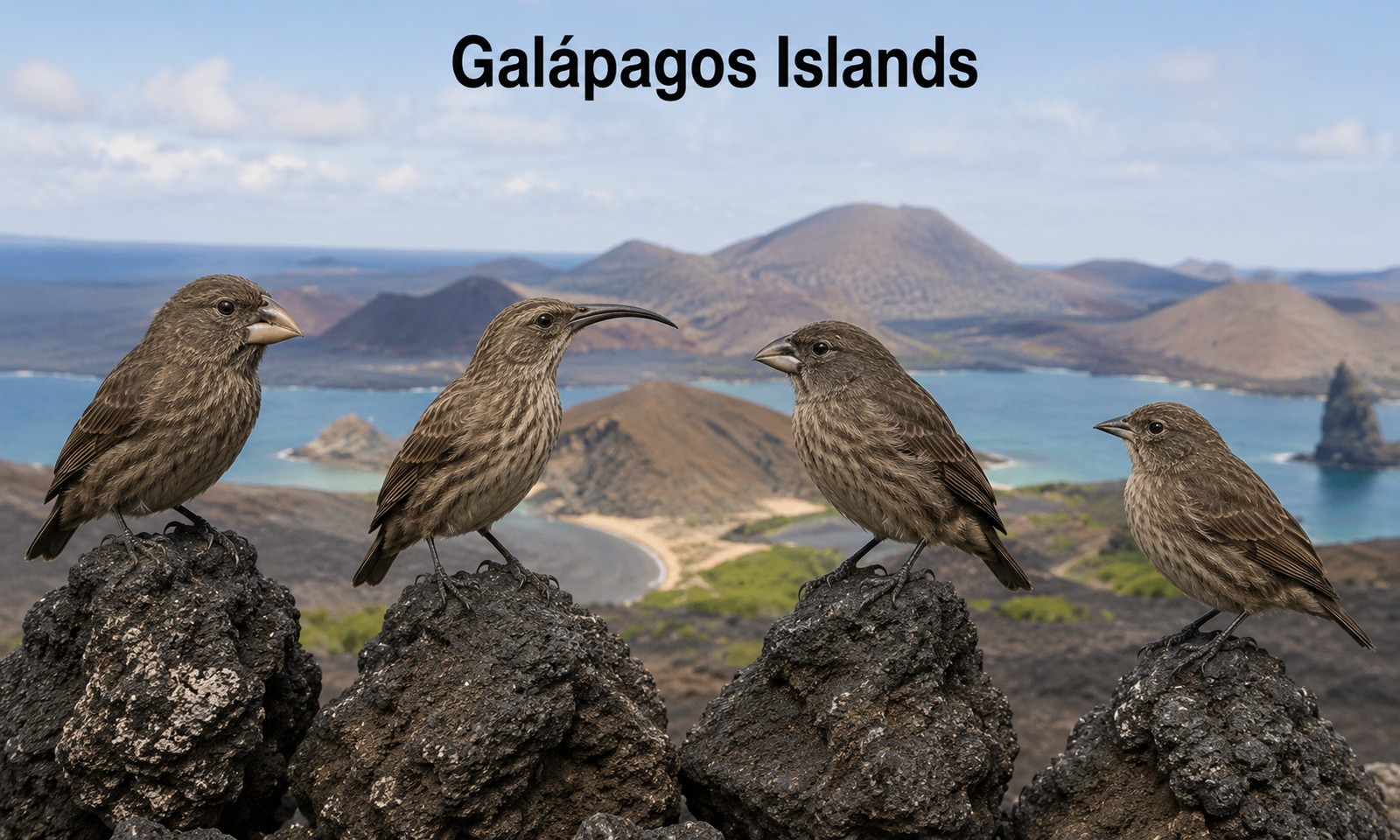
Charles Darwin observed 14 species of finches on the Galápagos Islands, all descended from a single mainland ancestor. Each species had a beak adapted to a different food source — small/sharp for insects, thick/strong for cracking seeds, long/curved for probing flowers.
Six lines of evidence for evolution
- Fossil record — layers show change over time (whale ancestors had legs).
- Homologous structures — same bone arrangement in human arm, bat wing, whale flipper. Common ancestry.
- Vestigial structures — appendix, whale pelvic bones — leftovers from ancestral function.
- Embryology — vertebrate embryos look strikingly similar early on.
- Biogeography — species on isolated islands resemble nearby mainland species.
- Molecular biology — closely related species share more DNA. The strongest modern evidence.
Vocabulary that often shows up
- Adaptation — an inherited trait that increases survival/reproduction in a specific environment.
- Speciation — one species splitting into two reproductively isolated species.
- Genetic drift — random changes in allele frequency, especially in small populations.
- Gene flow — allele exchange between populations via migration.
Check yourself