Great Depression & The New Deal: From Crash to Recovery
The 1929 stock market crash triggered the worst economic crisis in American history. President Franklin D. Roosevelt's New Deal redefined the role of the federal government.


A nation crashes
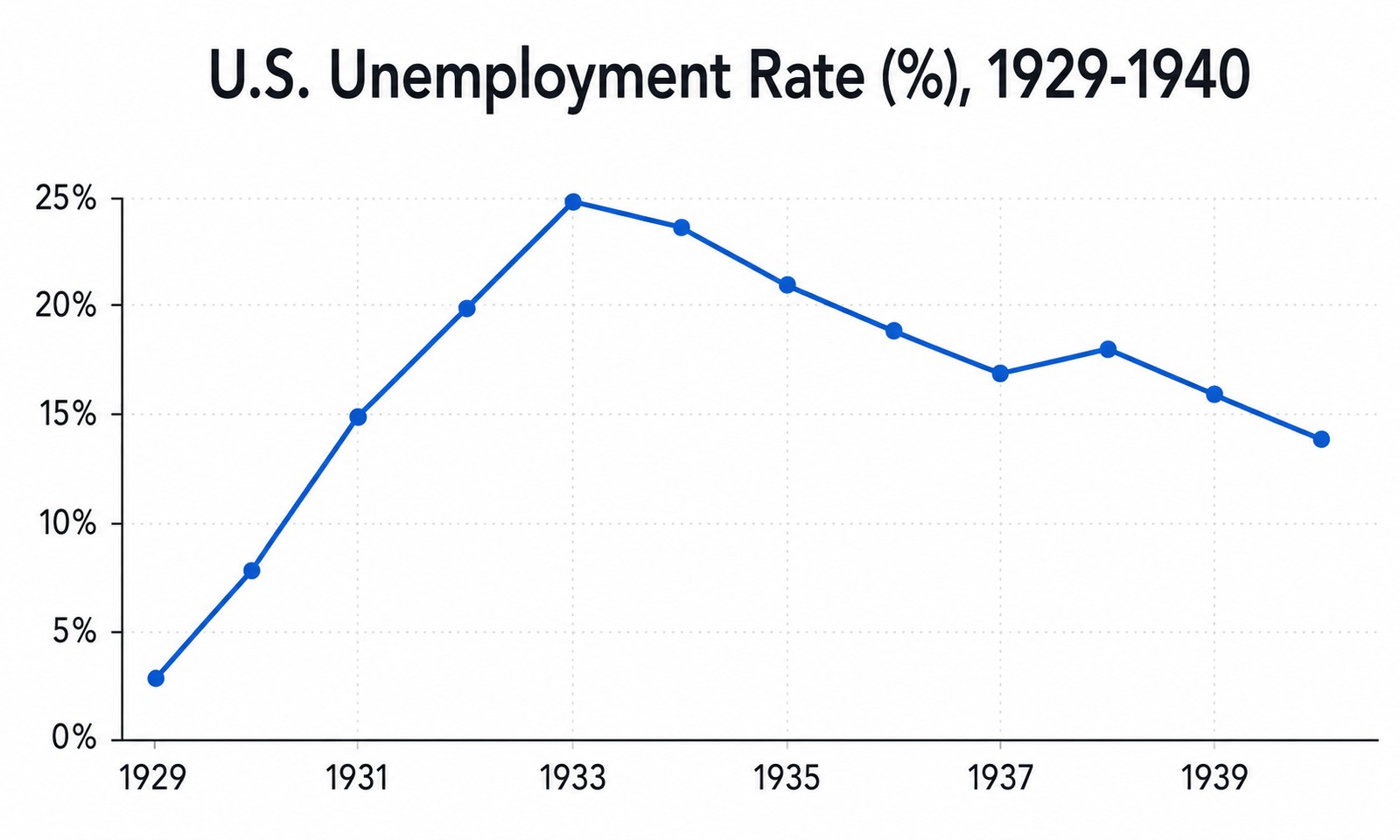
On October 29, 1929 — "Black Tuesday" — the stock market lost $14 billion in one day (about $250 billion in today's money). By 1933, unemployment hit 25%, banks were failing, and a quarter of US households had no income.
Why the Depression happened
- Stock market speculation — buying on margin (borrowed money) inflated stock prices way past actual value.
- Bank failures — when stocks crashed, depositors panicked. There was no FDIC. About 9,000 banks failed by 1933, wiping out savings.
- Tight monetary policy — the Federal Reserve made the crisis worse by tightening credit instead of easing it.
- Smoot-Hawley Tariff (1930) — raised import tariffs to protect US industries; other countries retaliated, collapsing global trade.
- Dust Bowl (1930s) — severe drought + over-farming destroyed agriculture in the Great Plains. 2.5 million Okies migrated west.
The New Deal (1933-1939)
Franklin D. Roosevelt won the 1932 election promising "a new deal for the American people." Within his first 100 days, Congress passed unprecedented legislation. The New Deal had three R's:
- Relief for the unemployed → Civilian Conservation Corps (CCC), Works Progress Administration (WPA) — direct jobs in conservation, public works, the arts.
- Recovery for businesses → National Recovery Administration (NRA), Agricultural Adjustment Act (AAA).
- Reform to prevent future crises → Securities and Exchange Commission (SEC), Federal Deposit Insurance Corporation (FDIC), Social Security Act (1935).
The New Deal didn't fully end the Depression — that took WWII. But it permanently reshaped the role of the federal government, establishing the social safety net Americans still rely on today.